

- Your cart is empty Browse Shop
Commercial Tomato Farming and Irrigated Horticulture in Nigeria
Year-Round Production | Irrigation-Controlled Supply | Grading | Structured Distribution
Tomatoes
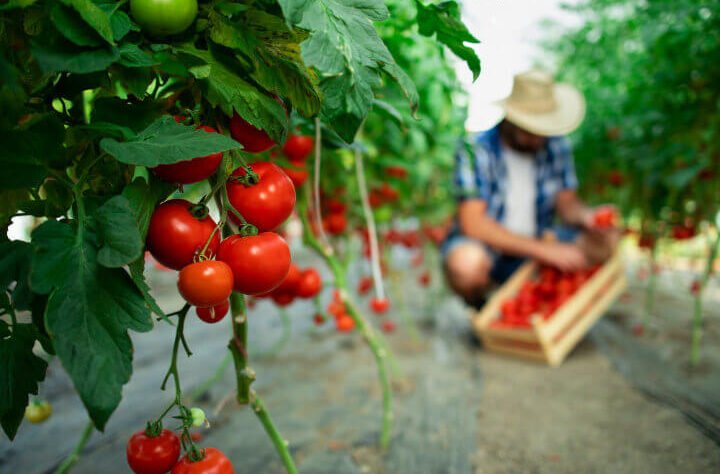
Stable Tomato Supply for Fresh and Processing Markets
Tomatoes are one of the most consumed and commercially traded horticultural crops in Nigeria. However, supply volatility, rainfall dependency, and post-harvest losses often disrupt availability and pricing.
Triadola Farms and Agro Processing Limited operates a structured **tomato farming and supply system** built on irrigation-backed production and disciplined post-harvest handling.
We integrate:
- Irrigated tomato cultivation
- Planned production cycles
- Controlled harvesting
- Sorting and grading systems
- Coordinated distribution
- Traceable supply documentation
Our goal is to deliver tomatoes as a reliable, commercially structured product, not a seasonal surplus crop.

Irrigated Tomato Farming in Nigeria
Tomato production is highly sensitive to rainfall variability, drought stress, and uneven watering.
Triadola integrates irrigation infrastructure including:
- Boreholes
- Solar-powered pumping systems
- Drip irrigation
- Sprinkler systems
Drip irrigation supports:
- Precise water delivery
- Reduced leaf wetness and disease pressure
- Improved nutrient efficiency
- Uniform fruit development
Irrigation enables year-round production cycles, allowing Triadola to produce beyond the traditional rainy season window.
For enterprise buyers, this means improved supply continuity.
For investors, this reduces revenue volatility.
Dry-Season Production Advantage
Tomato supply in Nigeria often fluctuates sharply between glut and scarcity periods.
Triadola’s irrigation-backed model allows us to:
- Produce during dry-season high-demand periods
- Reduce exposure to market gluts
- Stabilize pricing opportunities
- Support forward supply agreements
Dry-season production strengthens commercial leverage and improves throughput planning.
Controlled Crop Management
Triadola applies structured horticultural management practices to improve consistency.
Our Approach Includes:
- Defined planting schedules
- Field monitoring and supervision
- Pest and disease control oversight
- Coordinated harvest timing
- Yield performance tracking
This improves:
- Fruit size consistency
- Reduced cracking and rot
- Lower field losses
- Improved grading outcomes
Structured management supports specification-based supply.
Sorting, Grading & Post-Harvest Handling
Tomatoes are highly perishable. Without structured handling, losses can be significant.
Triadola emphasizes:
- Immediate sorting after harvest
- Removal of damaged fruits
- Defined grading categories
- Coordinated packaging
- Controlled movement to market
This reduces:
- Post-harvest spoilage
- Transport losses
- Buyer rejection rates
Structured handling improves supply reliability and commercial margins.
Quality & Traceability
Triadola operates under documented operational and quality management systems.
For tomatoes, this includes:
- Harvest records
- Grading documentation
- Dispatch tracking
- Batch-level identification
Traceability strengthens compliance readiness for:
- Institutional buyers
- Food service operators
- Processing partners
Tomatoes Within an Integrated Agribusiness Platform
Triadola’s tomato operations are supported by:
- Shared irrigation infrastructure
- Centralized quality control systems
- Coordinated logistics
- Multi-crop diversification (cassava, plantain, maize, yam, cocoa, palm oil, peppers)
Diversification reduces operational concentration risk and strengthens revenue stability.
Why Commercial Buyers Choose Triadola for Tomatoes
- Irrigated year-round production
- Reduced climate exposure
- Defined grading standards
- Lower spoilage rates
- Coordinated supply planning
- Traceable sourcing
- Integration with processing-aligned systems
We supply tomatoes as part of a disciplined, irrigation-backed agro-allied platform built for commercial reliability.
Commercial Engagement
Triadola Farms and Agro Processing Limited welcomes discussions for:
- Bulk pepper supply
- Food service contracts
- Processing partnerships
- Institutional procurement
- Long-term offtake agreements
